

Don't forget the Knifish
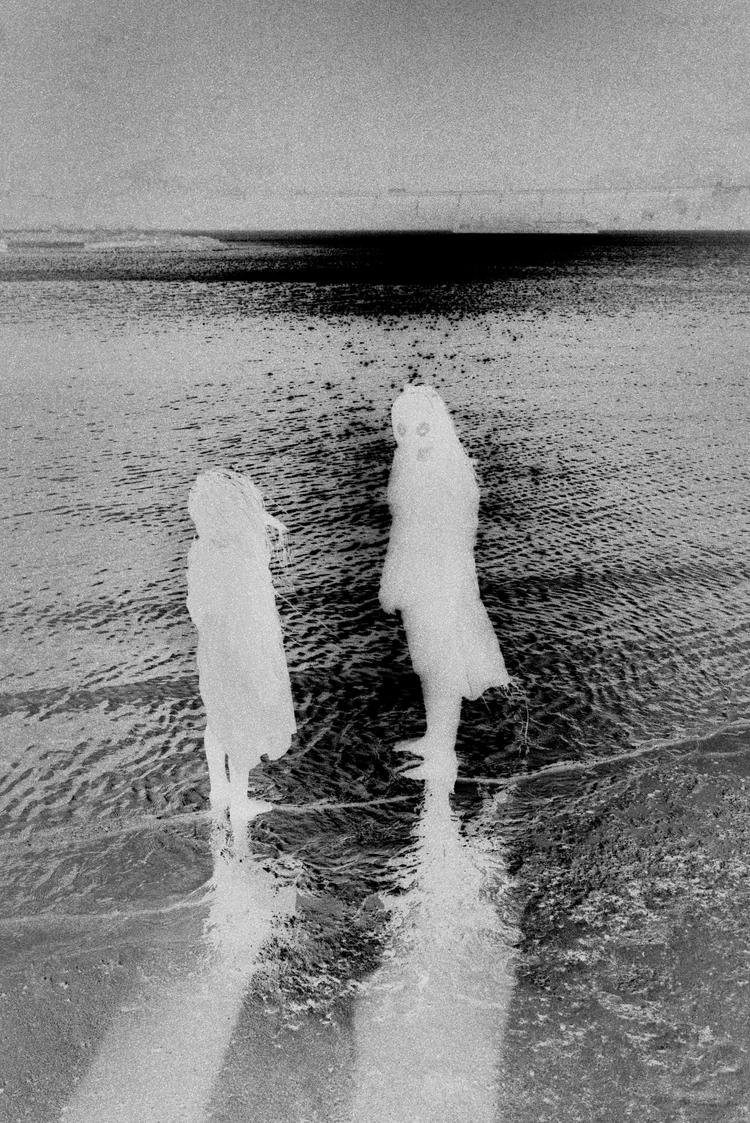
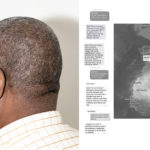
Don’t forget the Knifish is an intimate narrative about Tim Rod’s complicated and fragmented relationship with his father. When he was twelve, he learned about the existence of his biological father, triggering strong emotions and deeply challenging his identity and sense of self. Fourteen years later, at age twenty-six, he was able to meet his father for the first time, in Israel.
He harnessed photography equally as a means of protection and a way to mediate his emotional responses, and as a tool to make sense of this experience and craft a narrative reclaiming and reconstructing his memory and his own history. Working with different types of photographs – personal archives, portraits and street views, as well as staged, collaged or generated images – Tim Rod attempts to find coherence and meaning from a divided personal reality and a family history that relies as much on his imagination as on personal recollections from his family members.
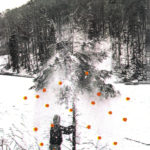
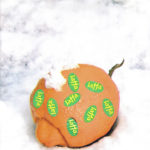
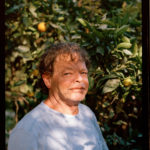
The gaps and the forged connections between different realities are highlighted in images that bring together the Jaffa oranges of his father’s home city and the firs and snowy mountains of Switzerland, or confront the faces of the father and the son. They translate the timidity, apprehensions and hesitations, but also the tenderness between a parent and a child who are getting to know each other in an emotionally fraught context.
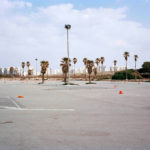
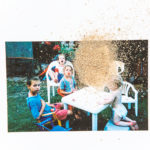
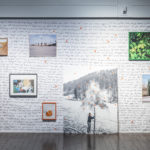
Urgent Paradise
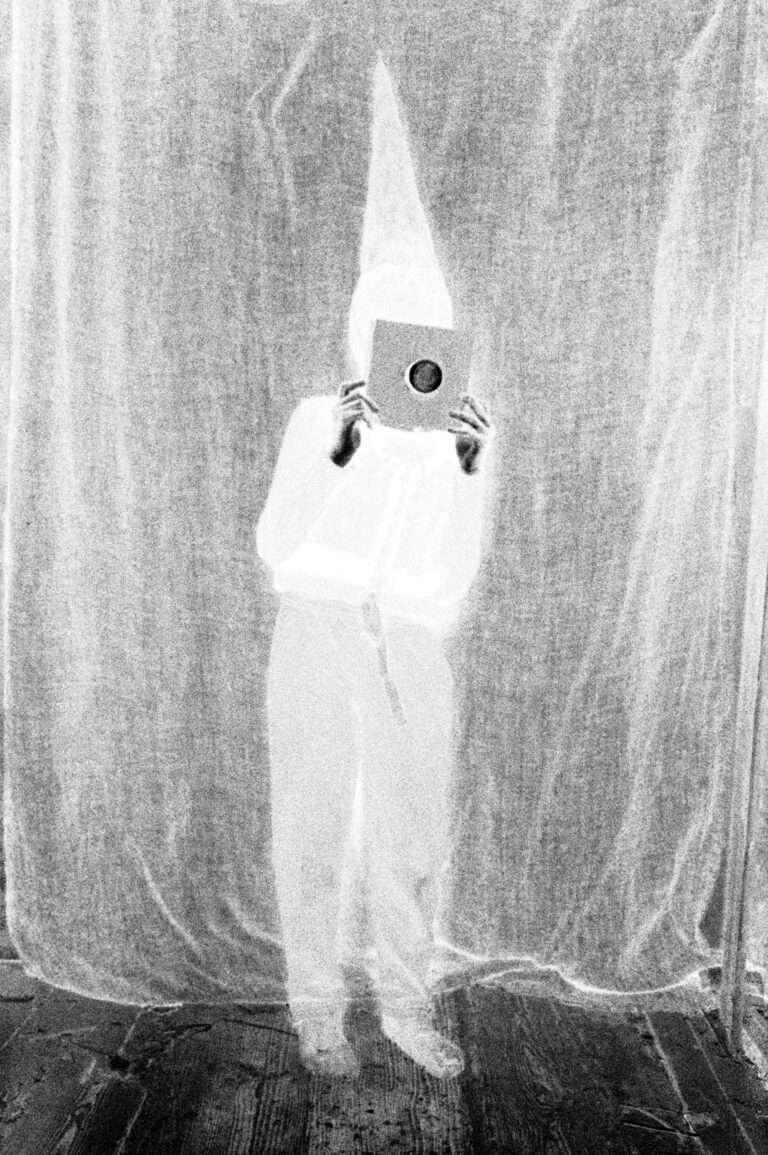
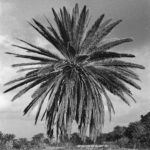
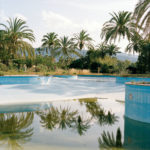
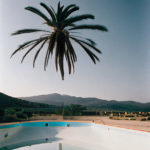
Tim Rod’s project Urgent Paradise is a visual research on the symbolic and cultural meaning of the palm tree in the Western collective imagination, in particular around tourism and escapism, made in collaboration with computational biologist Lucien Hinderling. For this project, Tim Rod combines different types of images, from analogue black and white photographs and street views taken during his own trips, to digitally manipulated and AI-generated images.
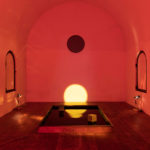
The generated images, where trunkless palm trees are often seen floating in the sky or hovering over cityscapes, offer a dreamy but incisive metaphor of how the palm tree has become a ubiquitous symbol of the tropics and a promise of leisurely existence. In our imagination, it is indeed no longer tethered to the often harsher realities of the territories it grows in. In exhibitions, Urgent Paradise, is often staged as site-specific installations where the simplest elements (red and yellow light, the outline of a trunkless palm tree) are used to bathe the visitors in an artificial tropical sunset.
à demain inshallah
Born in 1971 in Senegal, Edi Fuema (invented name) made his journey to Europe 17 years ago.
After living in Spain for ten years with his brother, where he obtained a residence permit,
he arrived in Switzerland in 2012. For the past nine years he has been earning his living by
collecting deposits on bottles and cups at parties and festivals in and around Bern.
In the Bernese alternative scene, Edi is always welcome; he is well known here.
People like him spend their lives under the society’s radar and have neither the reputation nor
the financial means to rent a permanent home. Nevertheless, he finds temporary places to stay,
like squats or shared apartments.
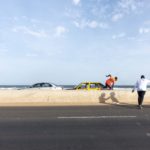
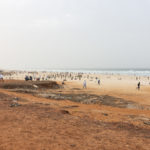
A few months after my first contact with him, I found out that he was looking for a family car
with lots of storage space and this piqued my curiosity; what did he have in mind?
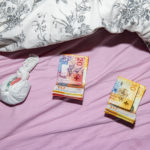
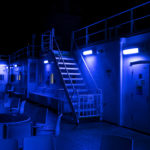
He had a lot of things he wanted to bring back to Dakar for his family and friends; bicycles, TVs, microwaves, etc.,
and that‘s why he was looking for a car. Surprised, I listened to him telling me that he had already
made about ten trips to his native country, as if the Senegalese capital was in the suburbs of Geneva!
While this seemed to be a normal project for Edi, I was fascinated by the idea of covering this vast geographical
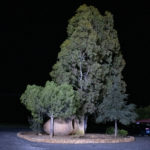
and cultural distance by land and I proposed him to make a documentary about his journey.
My motivation for making this photographic reportage is based on the fundamental question of origin, identity and rootedness of beings. His destiny Edi shares with a large group of people who, in the hope of better economic opportunities – especially to support their family back home – have gone into exile to earn a living as “migrant workers”.
Through this project, I try to sensitize a wide public to this individual destiny, which is representative
for many others.
Cut out poems
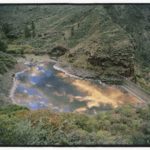
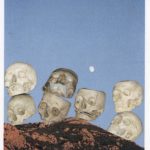
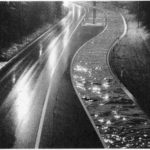
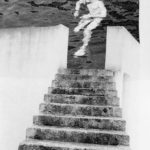
I began creating collages in 2021. A year earlier, I had printed a large portion of my photographic archive in postcard format, only to let them sit untouched in a disorganised heap for months.
Frustrated by the thought that they might never serve a purpose, I impulsively started cutting into some of the images with a cutter, or tearing them by hand, and then reassembling them in new ways. What started as indifference quickly turned into focused concentration, evolving into a practice that I pursued for months.
This process brought me immense satisfaction and gave me a newfound appreciation for having such an extensive photo-archive. The resulting images gradually grew into a new body of work of over 300 collages.
Fragmente der Erinnerung
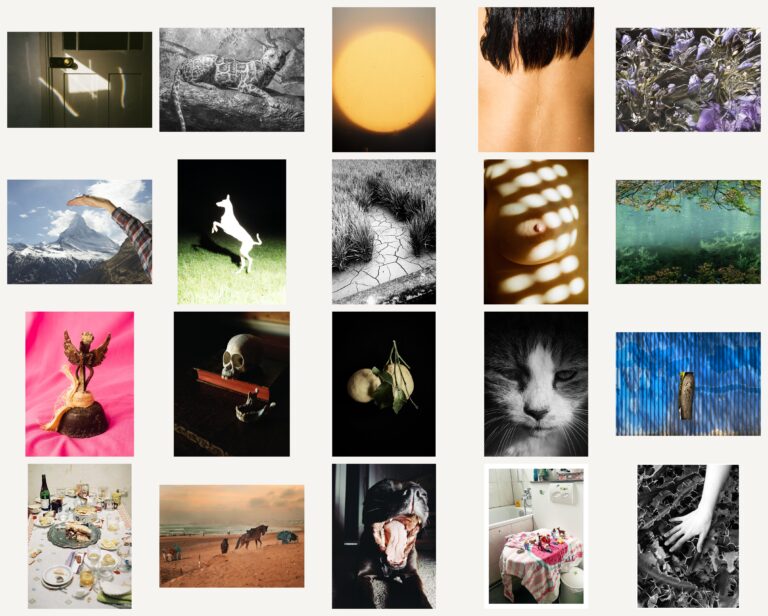
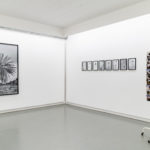
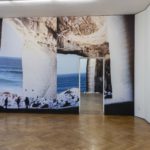
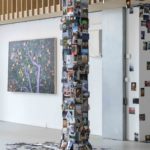
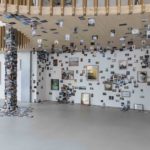
Tim Rod draws from his photo archive of the last ten years and brings a collection of images into the space. It’s a reflection of his own visual world, which over time threatened to fade into obscure oblivion.
The mostly digitally stored negative scans, originating from analog sources, become fleeting, invisible data. With his exhibition, he aims to make the images visible again, restore their tactile qualities, and allow them to speak for themselves, with each other, and within the space.
Thus, a portrait taken nine years ago finds itself next to a landscape shot taken a few months ago, forming a new connection together. However, no decision remains final: a combination that seems right today may feel wrong again tomorrow. The infinite possibilities of combining images contradict the initial desire for control that the artist aimed for in his master thesis.
The countless captures born from an insatiable interest in the surface of life become an organic network in the space, seemingly taking on a life of its own. Many small stories merge into a whole and, as an installation, grow into a new narrative once again.
Tim Rod, born 1992, is a Swiss artist based in Bern, Switzerland. He studied photography at CEPV – Vevey School of Photography (ES diploma, 2021) and holds a Master in Contemporary Arts Practice HKB – Bern University of the Arts. His work often explores issues related to exile and habitat, rootlessness and rootedness, as well as memory, identity, belonging and travelling. His own roots and family history are one of the central elements of his practice and his research, alongside collective visual culture. While his practice remains strongly rooted in photography, his works often expand into site-specific multimedia installations.
Location
Contact
Awards
- 2024Selected for Plat(t)form Winterthur
- 2023Shortlisted for Paris Photo Carte Blanche
- 2021Winner VFG Young Talent Award
- Shortlisted for Images Vevey Book Award
- Special Mention, Near. Prize
Exhibitions
- 2024Haute Photographie, Rotterdam NL
- Photo Brussels Festival, Gallery 254 Forest, Brussels BEL
- 2023Cantonale Bern/Jura, La Nef, St.Ursanne CH
- Cabane B, Bern CH
- Galerie Bernhard Bischoff und Partner, Bern CH
- Galerie Strates, Lausanne CH
- Reflector Contemporary Art Gallery, Bern CH
- 2022Vögele Kultur Zentrum, Pfäffikon CH
- UNO art space, Stuttgart DE
- European Photobook Month, Hongkong CHN
- 2021Photoforum Pasquart, Biel CH
- Haus der Fotografie, VFG Young Talent Award, Olten CH
- Encontros Da Imagem, Braga PT
- Charta Bookfestival, Rome IT
- Groupshow, Hackney Downs Studios, London UK
- 2020Group-exhibition, Festival Images Vevey, Vevey CH
- 2018Mixed Media&Fotografie, Kunstraum Oktogon, Bern CH
Publications
- 2024Fragmente der Erinnerung- akkumulieren und arrangieren, Self-published, Bern
- 2021Don’t forget the Knifish, Self-published, Vevey
- 2018LISBOA, Self-published, Bern